-
Product Stewardship
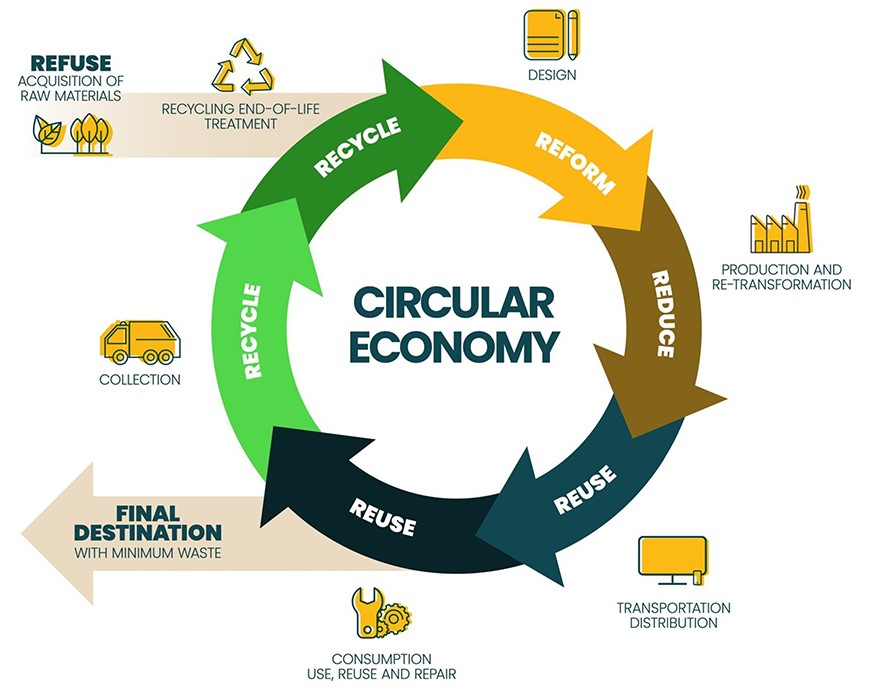
Product Stewardship is the act of minimizing health, safety, environmental and social impacts, and maximizing economic benefits of a product and its packaging throughout all lifecycle stages.
Regional Refuse Disposal District # 1 participates in many product stewardship programs as mandated by the State of Connecticut.
Paint
Oil-based paint is one of the most common materials brought into household hazardous waste (HHW) collections. Before EPR, it was also the costliest item to dispose. HHW collections are expensive, and municipalities rely on tax dollars to pay for these collections. Latex paint was not accepted at HHW events and residents were directed to dry the paint out and place it in the garbage. In 2003, Connecticut joined with other states and local governments in a dialogue with the paint industry, facilitated by the Product Stewardship Institute. As a result of the dialogue, the paint manufacturers agreed to a model EPR bill. Connecticut passed that bill in 2011. When customers purchase paint in Connecticut, there is a fee assessed which is remitted to the paint stewardship organization called Paintcare. This fee does not go to the state. Rather, the revenues are used to provide free and convenient collection of residential paint and stain through participating retailers, transfer stations and HHW collections. Connecticut typically collects around 400,000 gallons of paint annually, the majority of which is latex. RRDD1 can not accept marine, automotive or spray cans. This is classified as Household Hazardous Waste.
Mattresses
Mattresses are expensive to manage for both disposal and recycling. They are bulky and relatively light-weight. The coils can entangle processing equipment and it is labor intensive to recycle mattresses. In 2011, Connecticut became the first state in the country to pass an EPR law for mattresses. The program went into effect in May of 2015. Municipalities now have the ability to opt in to the mattress stewardship program and no longer have to bear the cost of disposing or recycling of mattresses brought in to transfer stations.
The mattress EPR program is run by the stewardship organization Mattress Recycling Council (MRC). MRC is responsible for managing mattresses from participating municipalities. The MRC assesses a fee if $16 for each mattress and boxspring purchased in Connecticut, which is used to finance the transportation and processing of discarded mattresses.
Since its inception, the mattress EPR program typically processes more than 200,000 mattresses per year, saving millions of dollars in disposal fees for municipalities. Regional Refuse accepts mattress and boxspring that are clean and dry free of charge. Mattress and box spring that are wet, soiled, damaged, have bugs or are broken will be accepted with a $30. disposal fee as they are not accepted in the Product Stewardship program.
E-waste
Electronic waste, or e-waste, is defined in Connecticut as computers, monitors, printers, and televisions. The EPR law for e-waste passed in 2007 and was modified in 2008. Regulations guiding the program were adopted in 2011 and the program began after adoption. The e-waste program is different than other EPR programs in that there is no stewardship organization. Instead, manufacturers register with the Department of Energy and Environmental Protection and pay approved recyclers to collect, transport and process covered devices from municipalities. Municipalities collect devices from residents through transfer stations or collection events. Regional Refuse accepts E-waste with some limitations. For resident digital security and identity protection, RRDD1 does not allow residents purchase or take items from the E-Waste collection point.
Gas Cylinders
Connecticut’s EPR law for gas cylinders passed in 2022. It is the first gas cylinder EPR law in the country. Gas cylinders can be difficult to recycle due to the residual gas and pressure. Certain cylinders can be reused many times before they can be recycled. Others are designed for single use. The gas cylinder EPR law is designed to increase reuse and recycling and shift the primary financial responsibility from the municipalities to manufacturers. Manufacturers submitted plans to the department in the summer of 2023 indicating how they intend to collect cylinders. The programs are expected to be underway in October 2025.
Tires
Illegal tire dumping has been a persistent problem for municipalities and the state. Some garages and retailers that generate used tires may illegally dump tires to avoid disposal fees. Some residents, wishing to avoid disposal fees at the transfer station, may dump one to four tires illegally. In addition, municipal transfer stations are experiencing increased costs associated with managing discarded tires from residents. Tire EPR is Connecticut’s newest EPR program, which passed in 2023 and is the first in the nation of its kind. The program is expected to begin in March 2026. When manufacturers assume responsibility for managing tires at the end of life, generators of used tires will no longer have to pay for disposal or recycling, therefore eliminating the primary incentive for illegal dumping. Towns and residents will save money by no longer having to pay for tire disposal. In addition, EPR will provide an incentive for tire manufacturers and recyclers to look at developing new markets for tires. Beginning in March of 2026 RRDD1 will be accepting tires in the product stewardship program. Currently RRDD1 charges for tires on and off rims. There are currently fees with tires.